The Tin Hau festival is celebrated on the 23rd day of the Third Moon (late April, early May). The day is set aside to honour a young girl named Mo Niang. She was re-named Tin Hau, the "Queen of Heaven", and is the "Mother" of boat people and sailors.
Tin Hau was born in Fukien in the year 1093. Legend tells a story that she bid her father and brothers farewell as they went off fishing. She went to sleep and had a dream they were drowning. She flew over the waters on clouds and rescued her family just as they were about to drown.
Tin Hau is also said to have been able to predict storms and sea traveller's fortunes. She died at the age of twenty and received her title shortly afterwards.
There are numerous shrines and temples dedicated to her spirit. On her birthday, the boat people, sailors and those who live on the waterfront, sail to Da Miao (the Great Temple) in Joss HoUse Bay and pay their respects to the goddess, praying for safety in the coming year.
alaways celebrate Tin Hau.
|
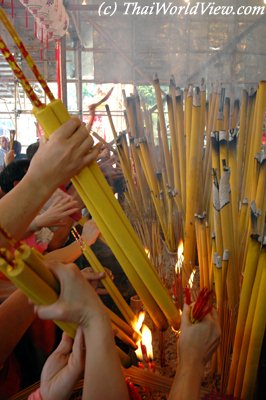
Hundreds of people rush to light up the first joss sticks and offer up them
to the goddess Tin Hau.
|
| Light up joss sticks |
|---|
|
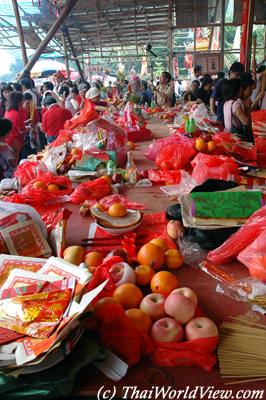
Oranges, suggestive of immortality and good fortune,
are piled high. Roast suckling pigs protect against ill health and bad luck.
Persimmons represent joy. Pomegranates, with their endless seeds, denote fecundity.
|
|
| Offering to Tin Hau |
|---|
|
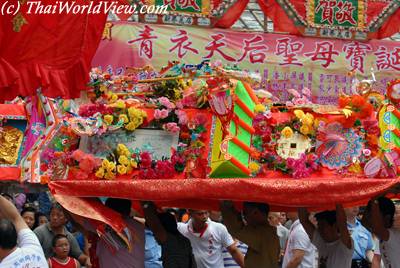
These villagers are carrying a 6-meter high "Fa Pau", floral paper offerings,
for celebration of Tin Hau festival.
|
| Carrying Fa Pau |
|---|
|
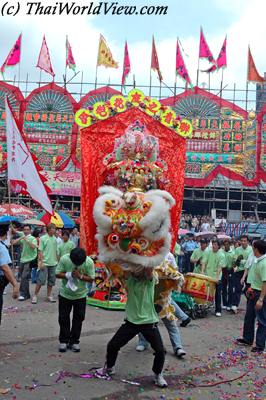
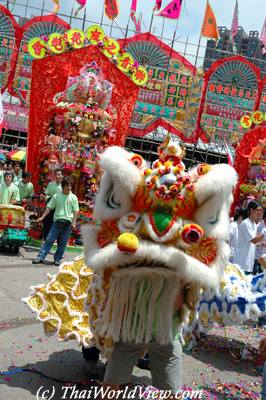
The beating of drums is the background music for the fearsome dancers.
Two people wear a colourful paper-mache lion head. With full coordination they
move through graceful gestures, expressing the feelings of the lion.
The lion may be bashful, playful or even angry and the steps of
the performers convey this mood to the audience.
|
|
| Lion dance |
|---|
|
This lion comes to worship Tin Hau. The lion shall not show its bottom to the goddess so
it has to walk backwards.
|
| Lion dance |
|---|
|
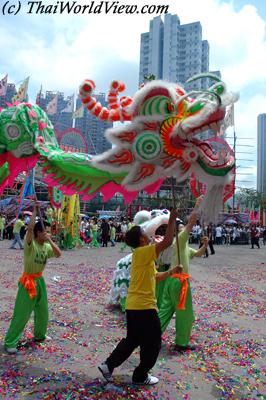
Spectacular parade of lion and dragon dancers goes to the local Tin Hau Temple.
There the village teams collect the "Fa Pau", floral paper offerings,
and perform in the temple yard.
|
|
| Dragon dance |
|---|
|
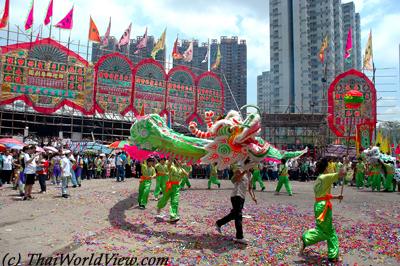
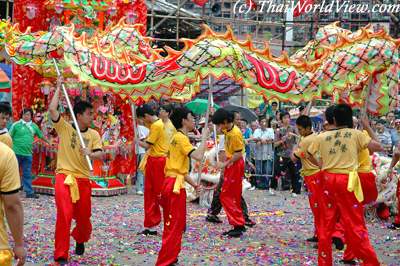
Beautiful dragon dance worshipping Tin Hau performed on Tsing Yi island.
In the background, a series of "Pai Lau" or traditional decorative billboards
have been erected.
|
| Dragon dance |
|---|
|
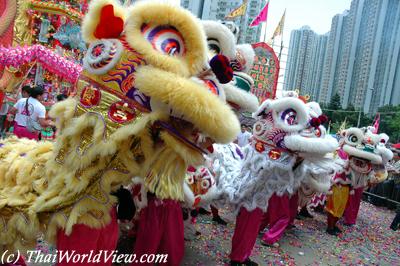
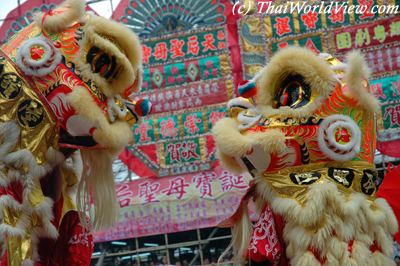
When two communities meet, their lions bow to each other's Tin Hau statues.
Sometimes the lions greet each other and have a dance together before
they move on.
|
|
| Lions |
|---|
|
A grand procession features golden dragons, colorful lions and unicorns, and participating
teams from local villages and organisations.
|
| Dragon dance |
|---|
|
Tin Hau is worshipped in more than 70 temples in Hong Kong.
Famous temples include the Tin Hau Temple in Stanley, which was restored in
year 2000.
|
|

Tidak ada komentar:
Posting Komentar